

Co-Writing with Friends: Handling Disagreements
Lock down notes, ownership, deadlines, and tie-breakers early to protect both your script and your friendship.

How to Write Scene Headings in Screenplays
Write consistent scene headings using INT./EXT. + LOCATION + TIME—caps, punctuation, mini-slugs, and a simple pre-share checklist.
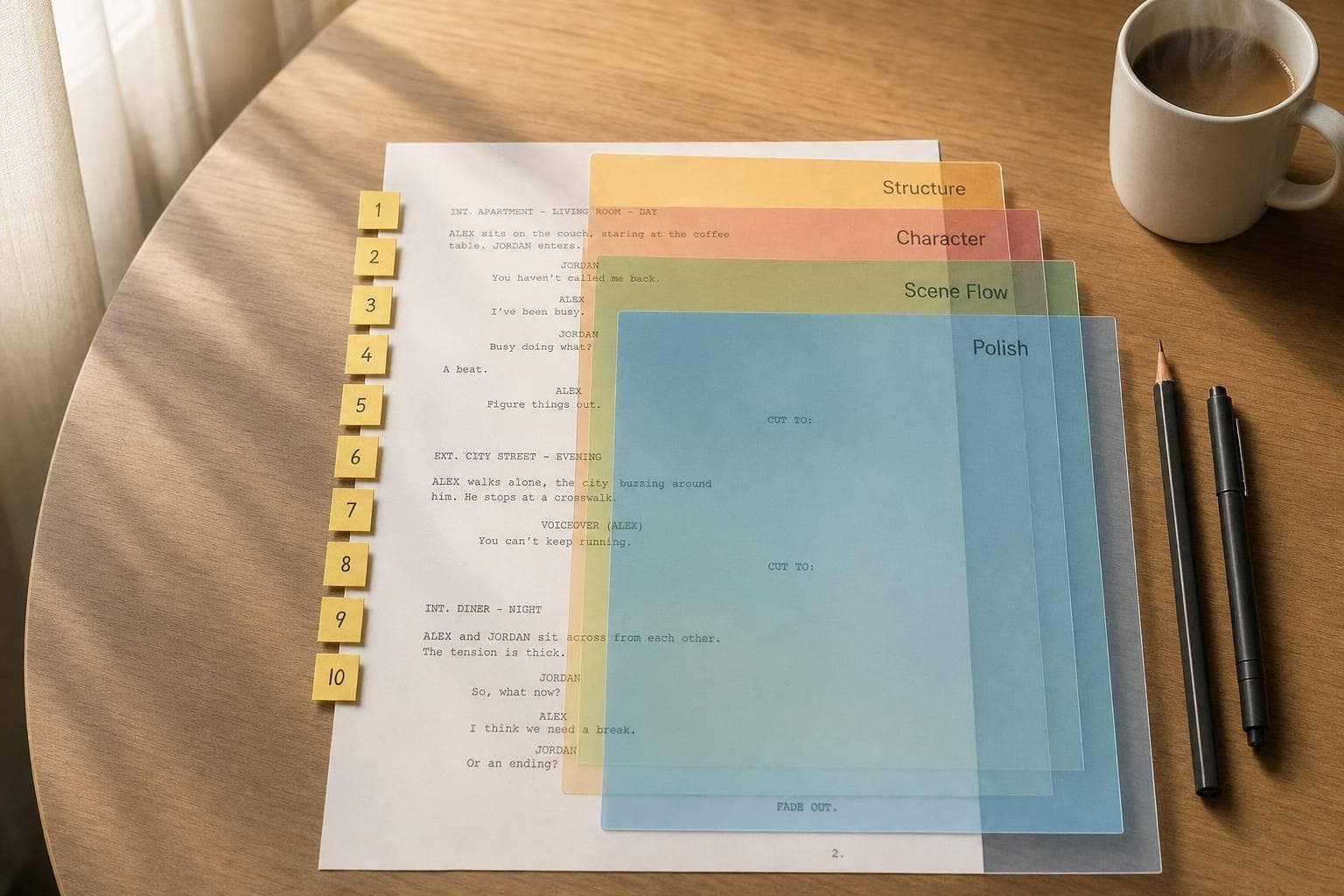
10 Revision Priority Note Examples for Scripts
Rank ten common script notes by impact and follow a four-pass rewrite: structure, character, scene flow, polish.
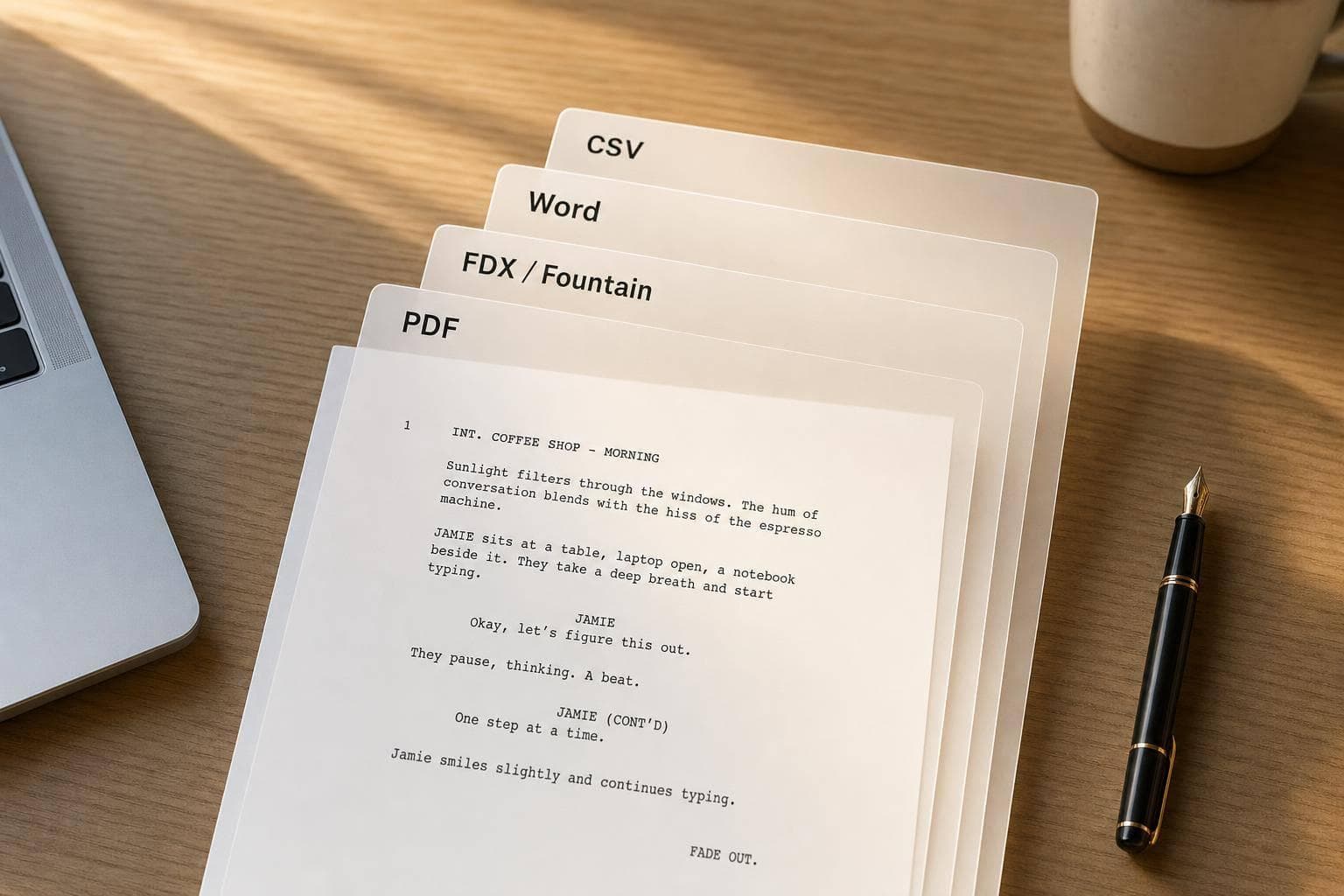
The Complete Guide to Exporting Screenplays in Any Format
Choose the right screenplay file: PDF for submissions, FDX/Fountain for edits, Word for notes, CSV for production.
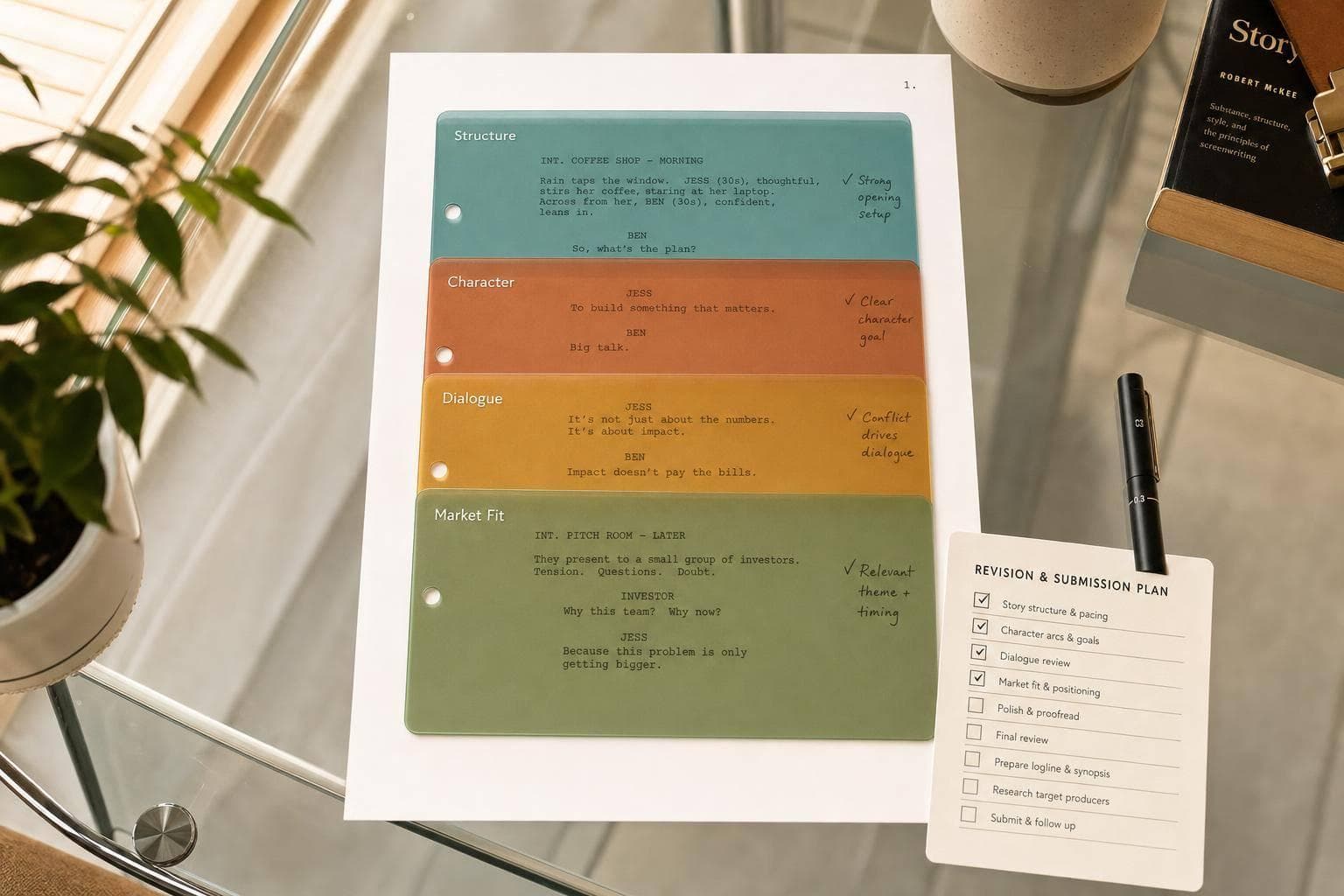
Script Coverage Explained: What Writers Need to Know
How coverage evaluates structure, character, dialogue, and market fit—and how to turn verdicts into a revision and submission plan.

How to Manage Multiple Screenplay Drafts Without Losing Work
Use consistent filenames, fixed folders, 3-2-1 backups, and version history to keep screenplay drafts safe and recoverable.
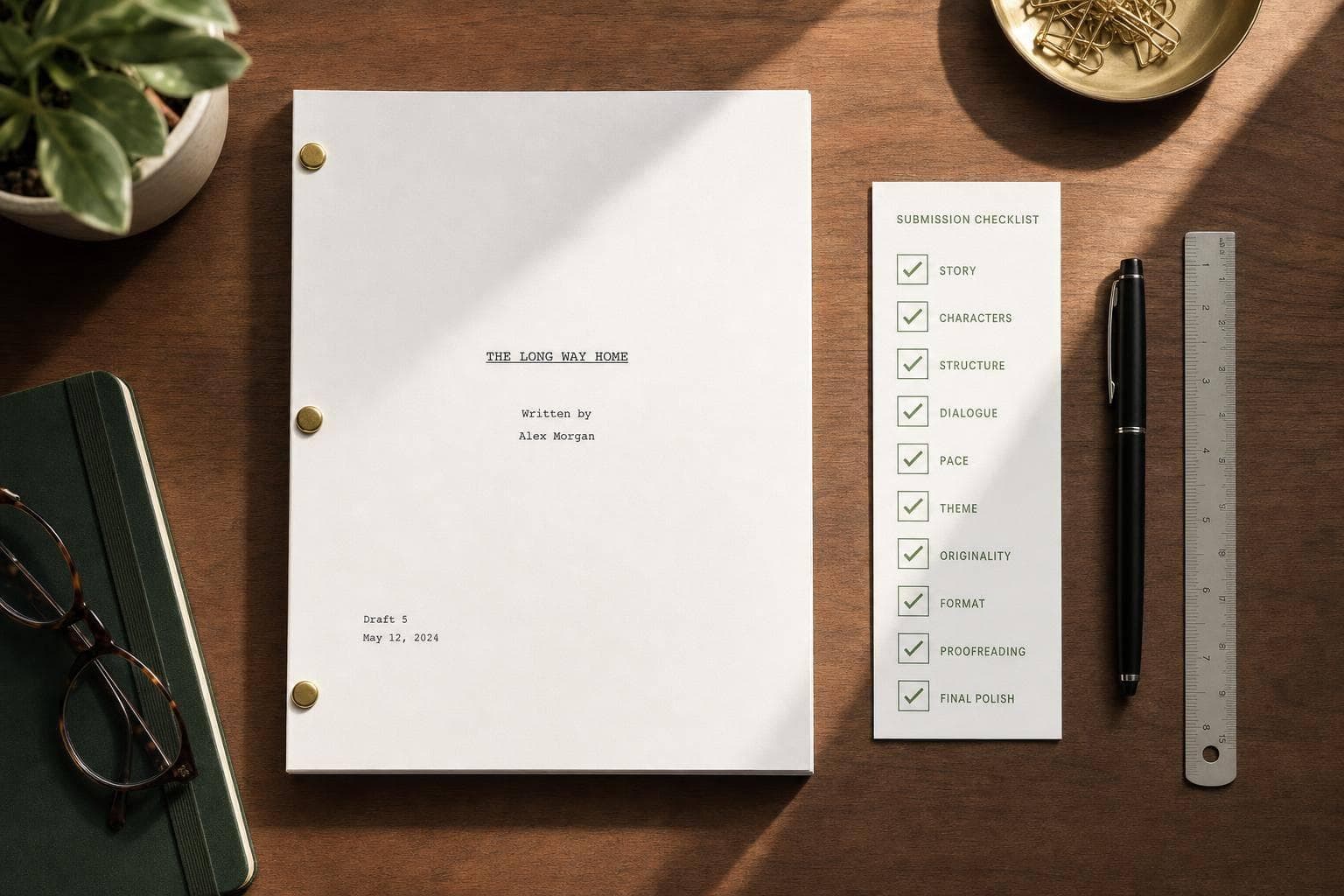
10 Signs Your Screenplay Is Ready to Submit
10-point checklist to make sure your screenplay's logline, format, structure, dialogue, pacing, and final file are submission-ready.

Final Draft vs. Fountain: Which Format Should You Use?
Draft in plain text for speed and version control; export to Final Draft (.fdx) for producer handoff and room revisions.
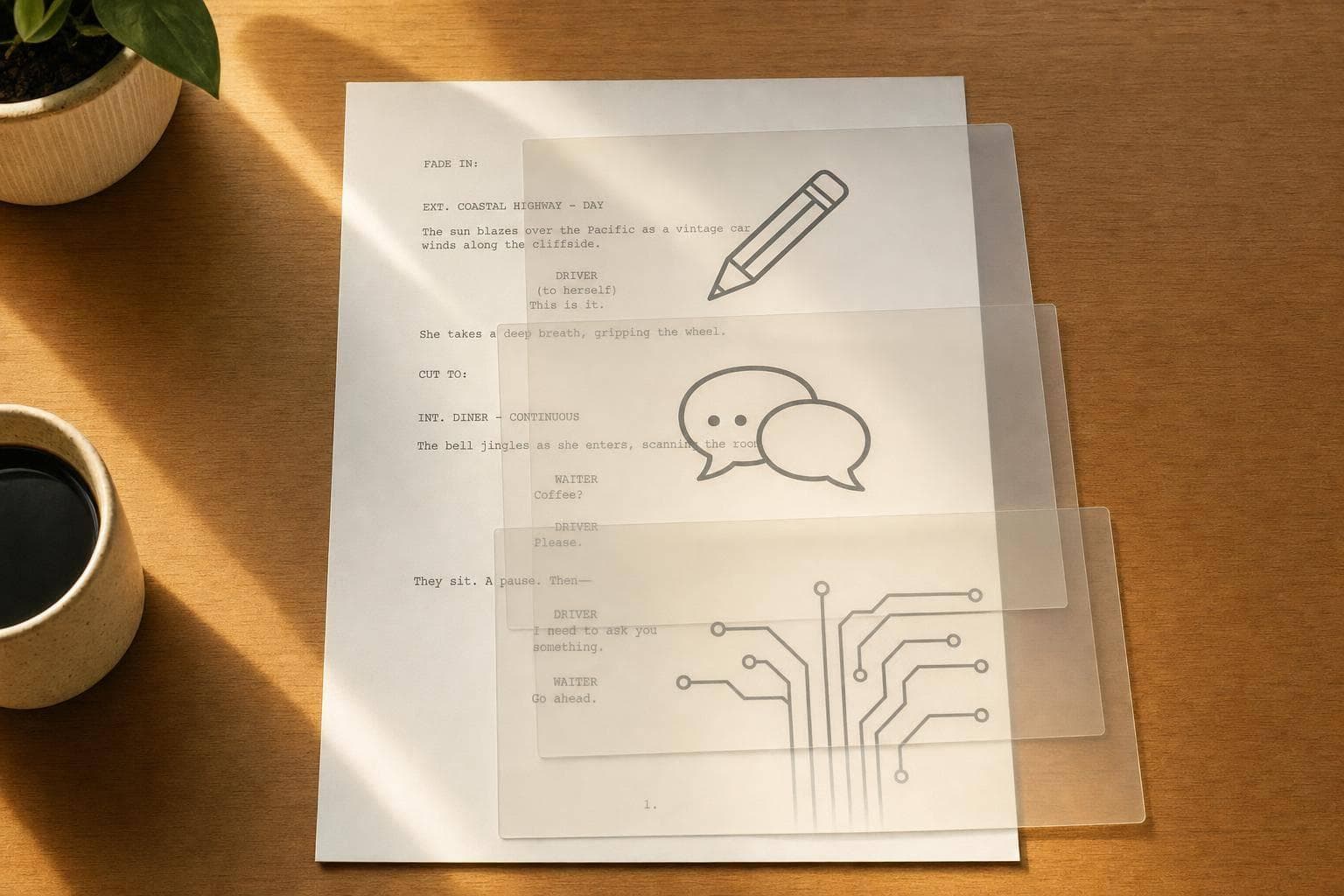
How to Get Script Coverage Without Hiring a Reader
DIY 3-step coverage: self-reads, structured peer feedback, and AI reports to get actionable script notes without hiring readers.
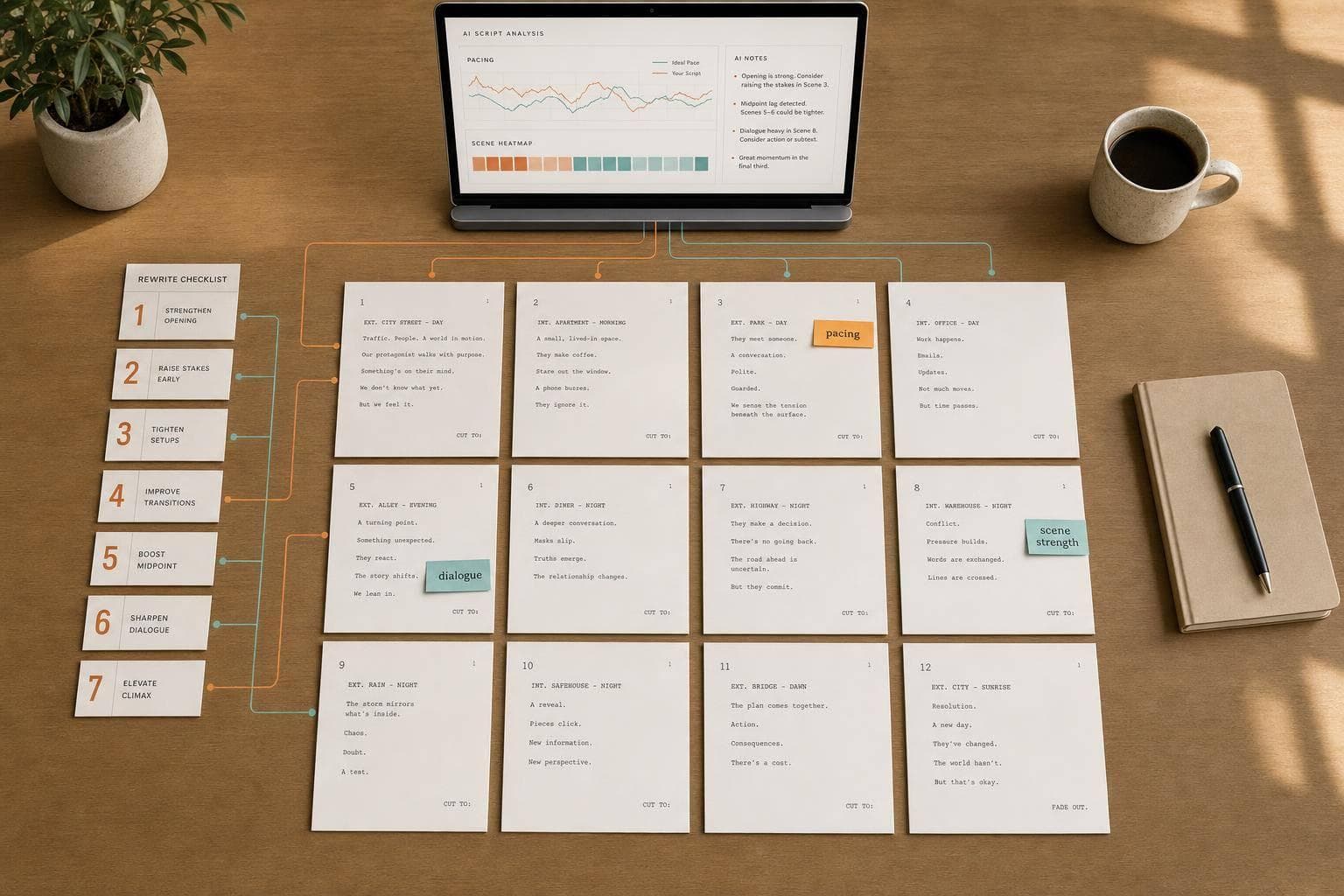
7 Ways AI Can Speed Up Script Rewrites
Use AI as a first-pass diagnostic to spot weak scenes, fix pacing, tighten dialogue, and turn notes into a ranked rewrite checklist.