
Script Coverage Explained: What Writers Need to Know
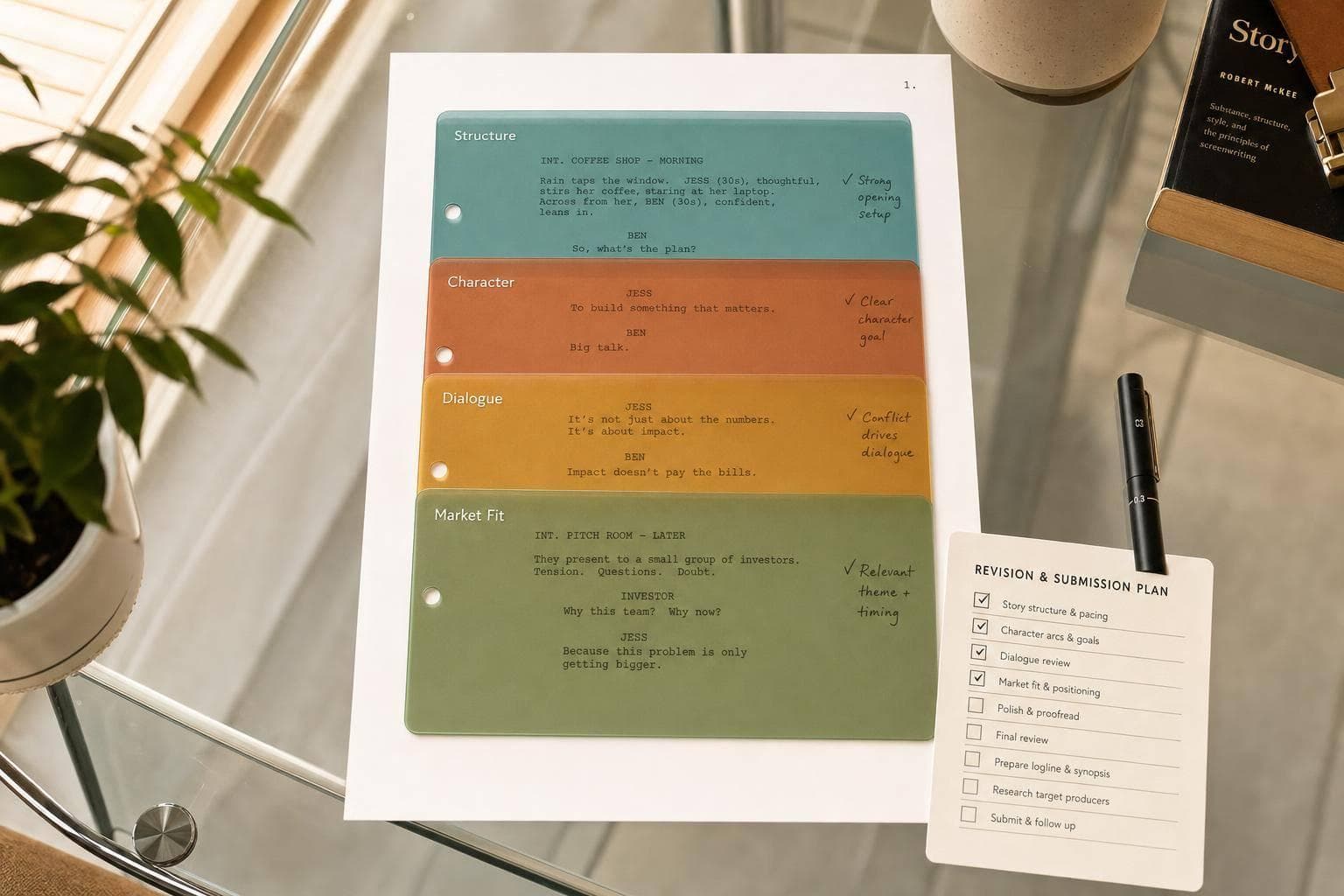
Script Coverage Explained: What Writers Need to Know
Most scripts get judged fast, and coverage is often the reason why. If I want to submit a script with fewer blind spots, I need to know how coverage works, what readers score, and how a Pass, Consider, or Recommend can change the next step.
Here’s the short version:
- Script coverage is a written report used by producers, reps, assistants, and contest readers to review a screenplay or pilot.
- It usually includes a logline, synopsis, comments, scorecard, and a final verdict.
- The report looks at core areas like structure, characters, pacing, dialogue, tone, and market fit.
- In most cases, structure and character problems mean rewrite, while dialogue notes mean polish.
- Coverage is not just feedback. It also helps me decide if a draft is ready to send out, better as a sample, or still not there yet.
- AI coverage can help me test drafts in hours instead of waiting days or weeks.
What this means for me is simple: I shouldn’t look at coverage as a grade. I should read it like a work plan. If low scores keep showing up in the same areas, that’s where I start.
A quick fact worth keeping in mind: most coverage reports end with just 3 outcomes - Pass, Consider, or Recommend. That single label can decide whether a script stops there or moves to a second read.
So if I want to submit with more control, I need to understand how coverage is built, who uses it, and how to turn notes into the next draft.
#Screenwriters: All About Script Coverage - What Is It? Do You Need It? #screenwriting
sbb-itb-609c31f
How a Script Coverage Report Is Structured
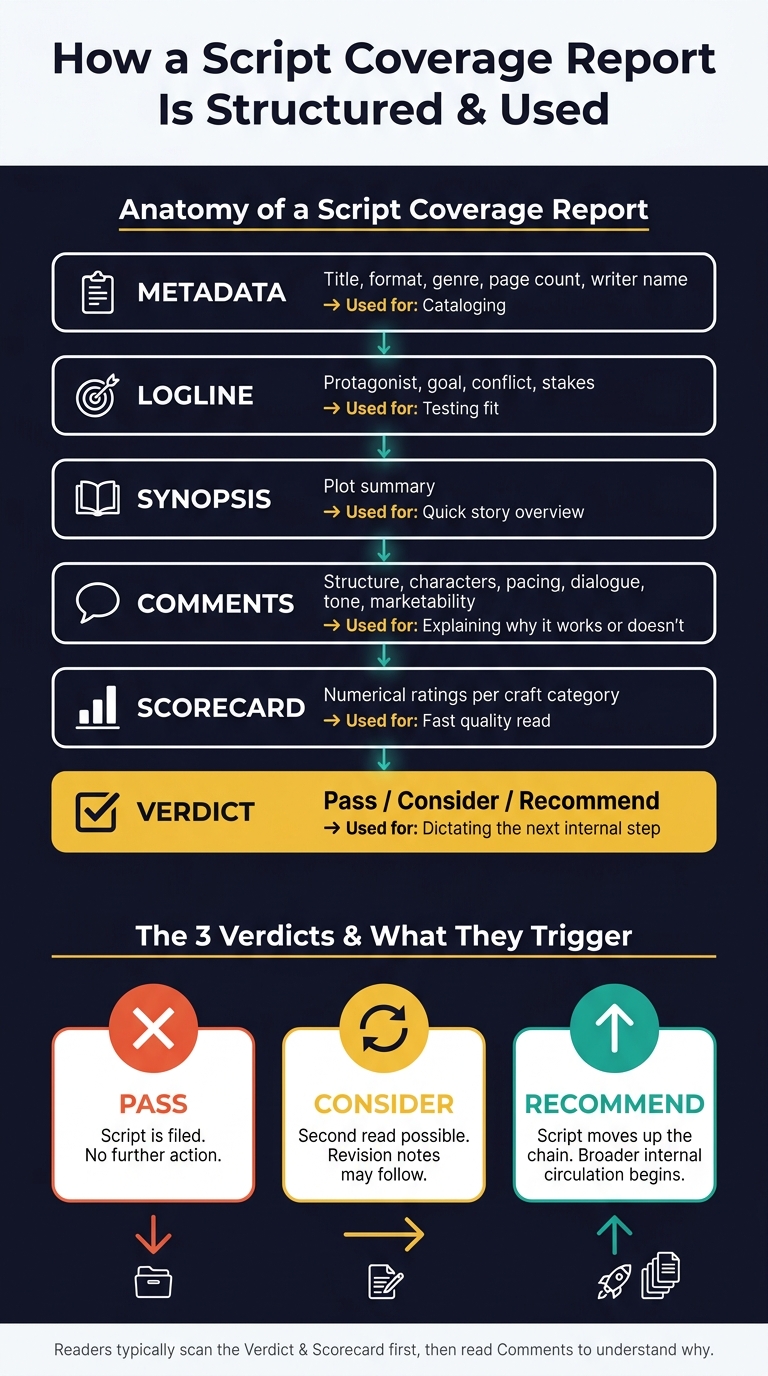
How Script Coverage Works: From Submission to Next Steps
Most coverage reports follow a pretty standard format. Once you know what each part is doing, it gets a lot easier to read the feedback with a clear head instead of taking in everything at once. The structure is there to help people make fast calls, not just retell the script.
Cover Page, Metadata, and Logline
At the top of the report, you’ll usually see the basics: title, format, genre, writer name, and page count. This header gives the reader the key details before they get into the notes.
Right below that is the logline. It’s often one or two sentences that sum up the protagonist, their goal, the main conflict, and what’s at stake. Since it’s one of the first things people read, it needs to be clear and tight.
Synopsis and Comments
The synopsis gives a summary of the plot.
The comments section is where the reader explains what’s working and what isn’t. That usually covers structure, character, pacing, dialogue, tone, and marketability, along with notes on commercial potential and audience appeal.
Pass, Consider, Recommend, and Scorecards
The verdict is the fastest signal of whether a script moves ahead. The three standard verdicts are:
- Pass - Not moving forward.
- Consider - Has potential, but needs work.
- Recommend - Strong enough to move up the chain.
The scorecard adds more detail with numerical or category-based ratings for craft areas like structure, characters, pacing, dialogue, and marketability. It gives a quick snapshot of where the script is strong and where it falls short.
| Coverage Section | What It Measures | How It's Used |
|---|---|---|
| Metadata | Title, format, genre, page count, writer name | Cataloging |
| Logline | Protagonist, goal, conflict, stakes | Tests fit |
| Synopsis | Plot summary | Gives a quick overview of the story |
| Comments | Structure, characters, pacing, dialogue, tone, marketability | Explains why the script works or doesn't |
| Scorecard | Numerical ratings per craft category | Fast quality read |
| Verdict | Pass, Consider, or Recommend | Dictates the next internal step |
Most readers scan the verdict and scorecard first, then turn to the comments to see why. Those sections show how the script gets judged; next comes who’s using that judgment.
How Readers, Assistants, Producers, and Development Teams Use Coverage
Why Readers and Assistants Write Coverage First
Once you know what shows up in coverage, the next step is understanding who reads it and what they need from it.
Readers and assistants turn scripts into short coverage reports so decision-makers can get through more material in less time. That’s the whole point. The logline, synopsis, comments, and scorecard matter only if they help someone make a call faster. Coverage also creates a draft history, which lets teams track changes across later rounds.
From there, the same report can serve very different goals depending on who’s holding it.
What Producers, Reps, and Development Teams Look For
Producers usually look for strong construction and commercial viability. Reps focus more on marketability. Development teams look at story strength and whether there’s enough there to support the next stage of development.
Marketability often carries extra weight because it shows whether a script has a clear audience and a commercial hook.
How Verdicts Change the Next Step
The verdict is the fastest signal in the report, but what happens next depends on who receives it.
The verdict shapes the next move. Pass files the script. Consider can lead to a second read or revision notes. Recommend can move the script into broader discussion or get it circulated internally for further development.
How Writers Should Read Coverage and Decide What to Fix First
How to Read Notes Without Overreacting
Once the report comes back, the job is to sort notes by weight, not take them personally. Coverage can sting. Still, it isn't personal. Look for issues that show up more than once across the report, not stray comments that appear only once.
That makes it easier to split rewrite problems from polish work. Notes about structure and character usually point to rewrites. Notes about dialogue and scenes usually point to polish.
If a note feels off, check it against the script before you treat it like a real problem.
One dialogue note usually means polish. Low structure and character scores usually mean rewrite.
How to Turn Scores and Comments Into a Revision Plan
Once the patterns are clear, sort fixes by impact first. A simple way to think about it:
| Priority | Coverage Category | What It Signals | Action |
|---|---|---|---|
| 1 - High | Structure & Character Arcs | Foundation of the story | Rewrite before anything else |
| 2 - Medium | Pacing & Marketability | Execution and commercial fit | Adjust once structure is solid |
| 3 - Low | Dialogue & Polish | Scene-level polish | Final pass after story works |
Here’s a plain example. If a pilot scores well on dialogue and tone but weakly on structure, that calls for a rewrite. If a feature has strong marketability and only needs dialogue cleanup, that’s a lighter polish pass. You’re not tearing the script down. You’re sharpening what’s already there.
If a note feels unclear, pause and figure out why the reader reacted that way before you brush it off.
How Coverage Should Shape Your Submission Strategy
Coverage is more than a revision tool. It also tells you where the script stands right now.
A script with strong marketability scores and only surface-level notes is more likely ready for producer outreach. A script with low structure and character scores needs another draft before it goes anywhere. Some scripts work better as writing samples than as projects ready for development.
Use the notes to decide whether the draft needs a rewrite, a polish pass, or a hold before submission. That triage sets up the next step: comparing drafts and applying notes in an AI-assisted workflow.
Using AI Coverage and Scriptwood in a Modern Development Workflow
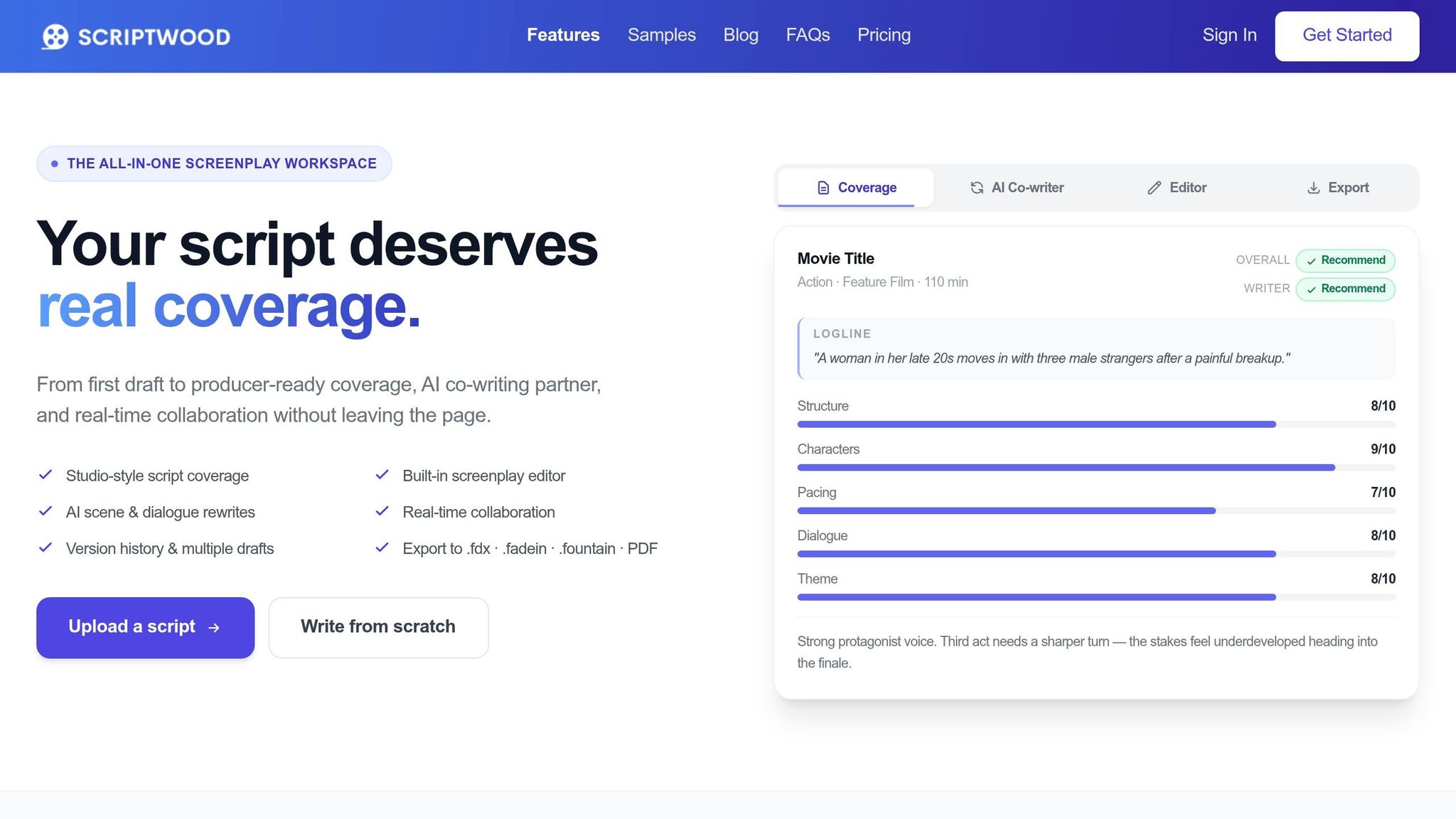
Where AI Coverage Fits in the Drafting Process
Once you've turned coverage notes into a revision plan, AI can help you pressure-test that plan fast. Use AI coverage to confirm whether the biggest problems sit in the structure, the characters, or the scene-by-scene execution. It can also flag issues with pacing, dialogue, logic, and marketability before submission.
That makes it a good last pass before you send the script out. The goal is simple: fix the obvious problems first, before a reader spots them.
From there, the workflow moves from diagnosis into rewrite.
How Scriptwood Supports Coverage, Rewrites, and Collaboration
Scriptwood gives writers one place to review notes, rewrite scenes, and compare drafts. If a coverage note feels fuzzy or incomplete, the AI Consultant feature lets you ask follow-up questions and get more direction. Version history also helps you check whether the top issues from coverage are actually getting fixed from one draft to the next.
For teams, Pro and Executive plans add real-time collaboration with inline scene comments. That makes it easier for co-writers to line up on coverage notes before they commit to a big rewrite.
Conclusion: What Writers Should Take From Coverage Before Submitting
Once the biggest issues are clear, move straight into revision and draft comparison. Use coverage to fix the script before you submit it.
FAQs
How long should script coverage be?
There’s no set length for script coverage based on the information provided.
What matters most is that the coverage clearly addresses the points a writer needs to see: structure, characters, pacing, dialogue, and marketability.
If it does that well, it can help shape revisions and support a smarter submission plan.
Can one coverage report predict a script’s chances?
No. A coverage report can’t predict a script’s chances.
It gives you structured, subjective feedback on things like structure, character, and marketability so you can improve your draft. But it is not a guarantee of commercial success, production readiness, or market performance.
When should I get coverage on a draft?
Get coverage early enough to shape revisions, but late enough that the notes match the draft you plan to send out.
In practice, that usually means using coverage after major draft saves or after big changes to structure, character, or pacing. From there, tackle the highest-priority notes first before you share the script with producers, reps, contests, or collaborators.
If you use AI coverage, read it with a critical eye and verify the notes before you base submission decisions on it.